At Hearts & Noses, we bring therapeutic medical clowning to children in hospitals and to older adults in memory care units.
Every visit is shaped by trust, respect, and connection.
Our clowns follow each person’s lead to co-create moments that ease fear, restore dignity, and spark joy.
We serve thousands of children and elders across Greater Boston every year.
We work in partnership with leading healthcare institutions, including Boston Medical Center, Franciscan Children’s, Mass General Brigham, Spaulding Rehabilitation Hospital, Tufts Medical Center, Hebrew Rehabilitation Center, and NewBridge on the Charles.
We also participate in special events that bring comfort and joy to children who are ill.
15
Professionally Trained Clowns
8
Partner hospitals and care facilities
1,000s
Of pediatric visits per year
100s
Of elder visits per month
100%
Permission-based interactions
Countless
Moments of joy and connection
Pediatric Clowning
Hospitals can be overwhelming for children, full of unfamiliar sights, sounds, and routines. In these environments, therapeutic clowning offers something powerful: empowerment.
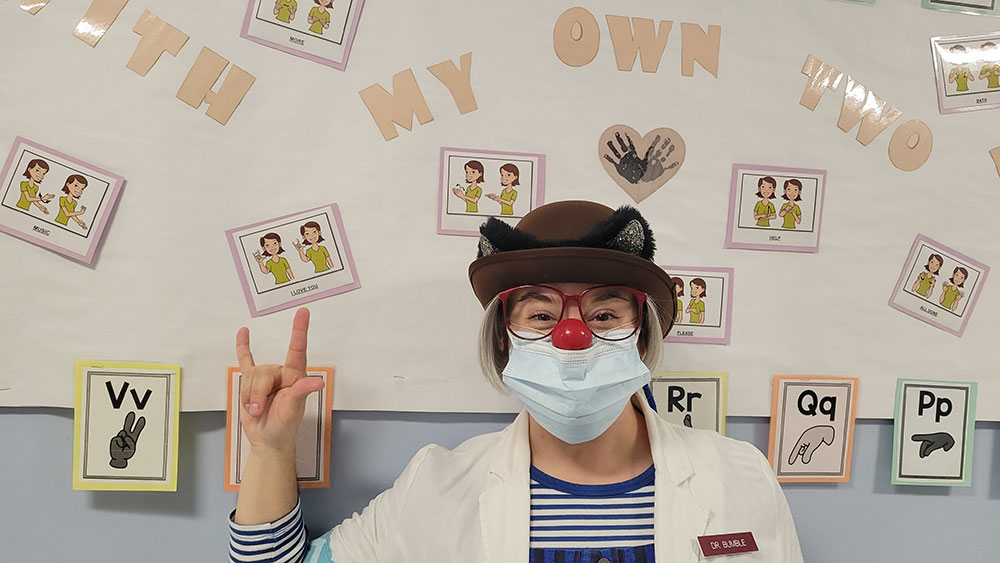
Our clowns always ask permission before engaging. Even a small nod, smile, or glance can offer a child control, something often lacking in a medical setting.
By inviting children into play on their own terms, we offer moments of agency, self-expression, and joy. Each interaction is improvised and attuned to the child’s emotional state, developmental stage, and desire to connect.
Sometimes, the most powerful thing we offer is the experience of being seen – and empowered – in a moment that might otherwise feel uncertain or out of their control.
Elder Clowning
In memory care settings, our clowns offer connection through presence, music, and emotional attunement.
Many elders we visit are living with dementia, and while verbal communication may be limited, emotional memory remains strong.
We use rhythm, song, movement, and eye contact to help residents feel grounded, dignified, and emotionally safe.
Our clowns often wear vintage-inspired clothing and engage with familiar sounds or gestures, gently anchoring individuals in a time or feeling they can still connect to.
Each interaction is slow, responsive, and respectful.
Whether in a quiet hallway or a common area, we focus on co-creating calm, joy, and shared humanity – meeting each person where they are and honoring the life they’ve lived.
In different settings:
- Memory care: Gentle, mostly non-verbal engagement
- Rehab units: More verbal, playful, interactive moments
- Common spaces: Emotional tone-setting through presence and connection, often employing music and dance to engage residents
The Common Thread of Clowning
Whether we are clowning for a child or an adult, the core of what we do is the same.
Every interaction is permission-based, not performance-based. We lead with presence, co-regulation, and empathy. And we follow each person — child or elder — and honor their emotional and cognitive state.
In every setting, we center the human being, not the illness or medical challenge that faces them.