Clowning in hospitals and memory care facilities brings something rare: a moment of connection, joy, and emotional presence — centered entirely on the patient or resident.
Each visit begins with choice. Every person, regardless of their age or stage, is invited to engage. That request for permission gives back a sense of autonomy in settings where so much control is often lost.
From there, the clown follows the individual’s lead, attuning to their emotional cues, energy level, and comfort in the moment.
The power of therapeutic clowning lies in its ability to change the emotional temperature of the room.
For children, it might mean transforming fear into laughter or offering playful agency. For elders, it might mean evoking memory through music or finding shared humanity in stillness and mirroring.
In every setting, clowning creates space where medical needs are not the focus. Instead, imagination, presence, and joy take the lead, supporting healing, resilience, and dignity in ways that medicine alone cannot.
Over nearly two decades, therapeutic clowning has grown into an international, evidence-supported field practiced in children’s hospitals, rehab units, mental health facilities, elder care communities, and trauma recovery centers around the world.
Clowning professionals gather regularly to share research, training, and insights across both pediatric and elder care contexts.
Why Clowning Matters
We don’t enter with a script. We arrive with presence.
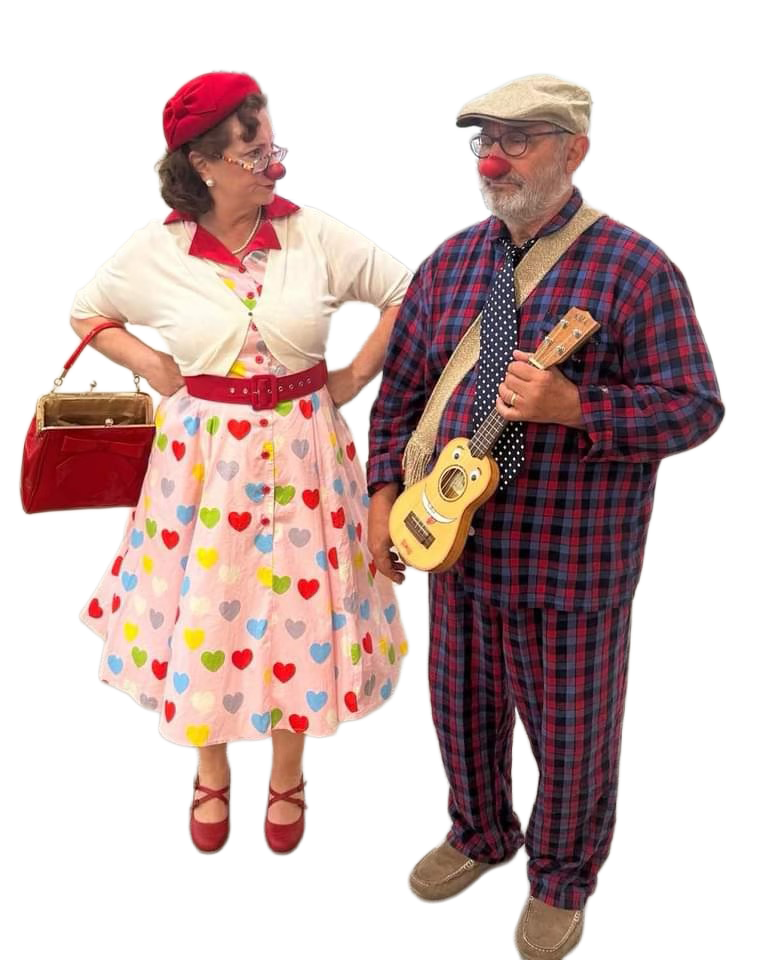
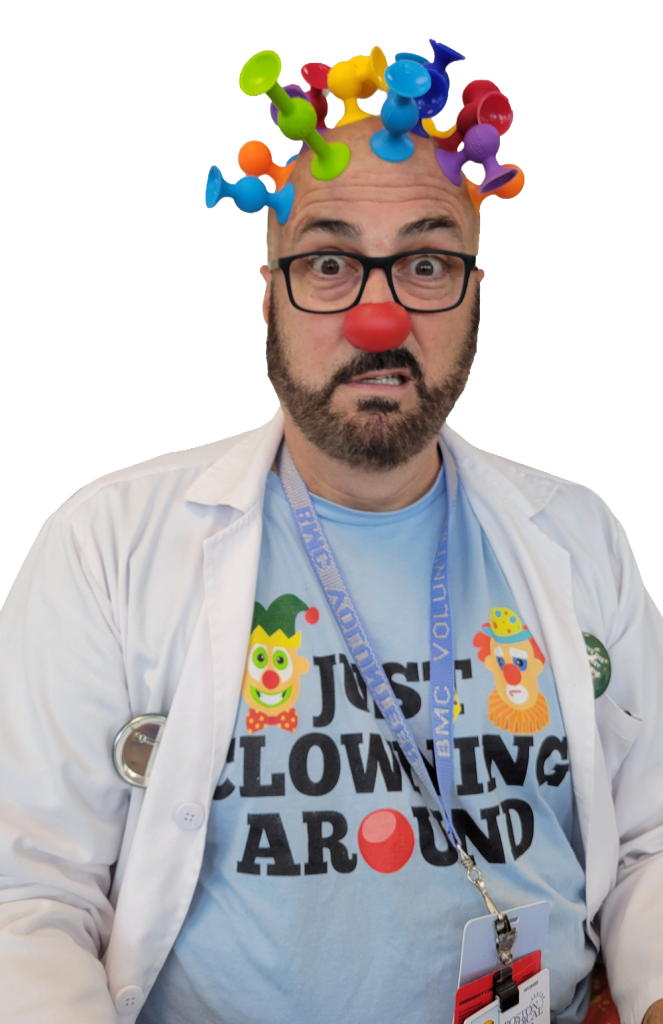
At Hearts & Noses, we use the art of therapeutic medical clowning to connect with patients and residents where they are — emotionally, physically, and cognitively. Each interaction is improvised, permission-based, and grounded in deep respect.
Whether we’re engaging a child during treatment or connecting with an elder in memory care, we aim to transform the emotional atmosphere, for patients, families, and care teams alike.
Our work brings a moment of lightness into serious situations, offering relief, laughter, and human connection.
Our unique brand of therapeutic clowning isn’t about distraction; it’s about transformation. It invites joy and connection into spaces where they’re often in short supply.
The Science of Clowning
“From the point of view of a physician caring for these patients, we view the hospital clown as a consultant of the health care team. Just as we turn to a gastroenterologist to perform an endoscopy, we ask the clowns to use their talents and training to transform the patient’s world for a brief moment.”
— Dr. Michael Agus, Medical Director
Clowning with children and elders in clinical settings may seem lighthearted, but its impact is serious — and measurable.
Decades of research from around the world show that therapeutic clowning:
- Reduces anxiety in pediatric patients
- Eases pain perception and procedure-related stress
- Supports emotional regulation in children with trauma
- Improves mood and communication in people with dementia
- Enhances staff morale and patient-family dynamics
- May even improve treatment outcomes in certain settings
Here are selected highlights from the growing body of published literature:
- Clowning in Health Care Settings: The Point of View of Adults
This study explores how adults perceive therapeutic clowning in hospitals, finding that clowns are viewed as comforting, respectful, and emotionally supportive.
Read the study - Healing Laughter: The Role and Benefits of Clown Doctors Working in Hospitals and Healthcare
This comprehensive analysis outlines the emotional, cognitive, and physiological benefits of therapeutic clowning, calling it a “complementary medicine” that lifts mood and humanizes care.
Read the chapter - More Than Just an Entertainment Show: Identification of Medical Clowns’ Communication Skills and Therapeutic Goals
This research identifies the core communication techniques used by medical clowns — including emotional mirroring, attunement, and personalized storytelling — and shows how they meet therapeutic goals across a variety of clinical settings.
Read the study
Additional Literature
- The power of “clowning around”
Medical clowns can reduce anxiety and length of hospital stay for children and medical research has found humor can have a positive effect on patients.
Read More - Laughing Through This Pain: Medical Clowning During Examination of Sexually Abused Children: An Innovative Approach
This study examined the role of medical clowns during medical examinations of children who were sexually abused.
READ MORE - Medical Clowns Facilitate Nitrous Oxide Sedation during Intra-Articular Corticosteroid Injection for Juvenile Idiopathic Arthritis
A common procedure in juvenile idiopathic arthritis, is usually associated with anxiety and pain. Following the introduction of medical clowns in our hospital, we added them as an integral part of the team performing IACI.
READ MORE - Clowning as a supportive measure in paediatrics – a survey of clowns, parents and nursing staff
Hospital clowns, also known as clown doctors, can help paediatric patients with the stress of a hospitalization and to circumvent the accompanying feelings of fear, helplessness and sadness, thus supporting the healing process.
READ MORE - Therapeutic clowning in paediatric practice
Clowns help children to adapt to their hospital surroundings and can distract from, and demystify, painful or frightening procedures through ‘doses of fun’ to complement traditional clinical interventions.
READ MORE - Effect of a clown’s presence at botulinum toxin injections in children: a randomized, prospective study
In a pediatric ward, botulinum toxin injection is a painful procedure and a stressful experience for the child. We undertook a study of the effect of the presence of a hospital clown on children treated with botulinum toxin in an outpatient setting.
READ MORE - Medical Clowning: Even Adults Deserve a Dream
The article examines the significance of the integration of medical clowns as an intervention strategy with adult outpatients suffering from chronic illnesses. The dominant theme involves the definition of the clown’s role and includes perspectives on his integration into the hospital’s multidisciplinary medical staff and his impact on the staff and on patients and their families.
READ MORE - Clowning Within Drama Therapy Group Sessions: A Case Study of a Unique Recovery Journey in a Psychiatric Hospital
This qualitative research delineates the recovery journey of four persons with severe mental illness that experiment, from within, with the healing potential of creating, playing and acting a clown character in a context of ten drama therapy group sessions.
READ MORE - Infinite Possibility: Clowning With Elderly People
Medical research supports our human instinct that people who smile and laugh are happy, whereas those who are inexpressive are usually not happy. Research shows that humor stimulus results in mirth, which elicits a primarily emotional response with psychological effects, and laughter, which elicits a physical response with physiological effects.
READ MORE - Effects of a humor-centered activity on disruptive behavior in patients in a general hospital psychiatric ward
The aim of this study is to investigate the effects of a humor-based activity on disruptive behaviors in patients hospitalized in a psychiatric ward.
READ MORE - Still the Best Medicine, Even in a War Zone, My Work As a Medical Clown
Medical clowning has developed increasing prominence over the past two decades and, over the past 10 years, has been especially used in treating people suffering from post-traumatic stress disorder (PTSD) in war zones and in the wake of natural disasters.
READ MORE - The effect of medical clowning on pregnancy rates after in vitro fertilization and embryo transfer
Medical clowning as an adjunct to IVF-ET may have a beneficial effect on pregnancy rates and deserves further investigation.
READ MORE - Tackling Indifference—Clowning, Dementia, and the Articulation of a Sensitive Body
Focus on a special form of clowning for people at an advanced stage of dementia. The clown is presented as a specialist in contact with people with whom communication is no longer possible by the usual (linguistic, cognitive) means.
READ MORE - Humor in the “Twilight Zone”: My Work as a Medical Clown With Patients With Dementia
Medical clowning has been primarily identified with working with children in pediatrics wards in hospitals. Over the past decade, more and more medical clowns have been working with adults and with patients with dementia as part of holistic care. Along with traditional medical care by hospital staff, the medical clown treats the patient’s emotional side.
READ MORE - Stand up for dementia: Performance, improvisation and standup comedy as therapy for people with dementia; a qualitative study
The aim of this qualitative study was to describe and investigate the effects of a program of stand-up comedy and improvisation workshops on people with early stage dementia. The data suggest that the program may have therapeutic benefits as improvements in memory, learning, sociability, communication and self-esteem were demonstrated.
READ MORE